

I. Introduction
In the realm of professional immigration and career advancement, the RPL Report Writing Services Australia assists in your ACS (Australian Computer Society) Skills Assessment Report stands as a crucial document. It serves as a validation of an individual’s qualifications, particularly in the field of information and communication technology (ICT), for migration purposes or career progression within Australia. Whether you’re seeking to immigrate to Australia under skilled migration programs or aiming to advance your career within the country, a meticulously prepared ACS Skills Assessment Report is paramount.
To navigate the intricate process of ACS Skills Assessment effectively, it’s imperative to have a comprehensive understanding of its requirements and guidelines. Hence, this checklist serves as a strategic guide to ensure a seamless and successful preparation of your assessment report. By meticulously following each step and adhering to the outlined criteria, applicants can streamline their application process and increase the likelihood of a positive assessment outcome. Let’s delve into the checklist to embark on your journey toward a successful ACS Skills Assessment Report.
II. Understanding the ACS Skills Assessment Report
The Australian Computer Society Skill Assessment conducts a thorough review known as the ACS Skills Assessment Report to determine whether a person’s education and professional background are appropriate for a position in the information and communication technology (ICT) industry. This assessment is crucial for individuals intending to migrate to Australia under skilled migration programs or seeking professional recognition for career advancement within the country.
Key Components and Requirements:
Academic Qualifications:
Provide transcripts and certificates of completed academic qualifications related to ICT.
Ensure that qualifications meet the ACS educational requirements, including equivalence to Australian standards.
Work Experience:
Detail professional work experience in the ICT field, including job titles, duties, and duration of employment.
Demonstrate a minimum number of years of relevant work experience based on the Australian Computer Society Skill Assessment guidelines.
ICT Content of Qualifications:
Assess the content of academic qualifications to ensure they align with the recognized ICT areas specified by ACS.
Highlight ICT-related subjects, projects, or research undertaken during academic studies.
Recognition of Prior Learning (RPL):
Submit RPL if lacking formal ICT qualifications but possess significant ICT work experience.
Provide detailed descriptions of projects, responsibilities, and achievements to demonstrate ICT competency.
English Language Proficiency:
Meet the English language proficiency requirements specified by ACS, usually through standardized tests such as IELTS or TOEFL.
Provide valid test scores or evidence of exemption based on citizenship or previous qualifications.
Professional Development:
Document any relevant professional development activities, such as certifications, training programs, or conferences attended.
Highlight ongoing efforts to stay updated with advancements in the ICT field.
References:
Obtain professional references attesting to your ICT skills and work experience.
Ensure references include contact information and details of the referee’s position and relationship to the applicant.
III. Pre-Writing Preparation
Before commencing the writing process for your Australian Computer Society Skill Assessment Report, thorough pre-writing preparation is essential. This stage involves gathering the necessary documents and evidence while also ensuring a clear understanding of the ANZSCO (Australian and New Zealand Standard Classification of Occupations) code corresponding to your occupation. Here’s what you need to do:
Gathering Necessary Documents and Evidence:
- Academic Qualifications: Collect transcripts, certificates, and any other relevant documents verifying your academic qualifications in the field of ICT.
- Work Experience: Compile employment certificates, contracts, reference letters, and other documentation substantiating your work experience in ICT roles.
- English Language Proficiency: Obtain valid test scores from recognized English language proficiency tests such as IELTS or TOEFL. Alternatively, gather evidence of exemption based on citizenship or previous qualifications.
- Professional Development: Document certifications, training programs, workshops, and conferences attended to demonstrate ongoing professional development in ICT.
- Recognition of Prior Learning (RPL): If applicable, prepare detailed descriptions of ICT-related projects, responsibilities, and achievements to support your RPL application.
- References: Secure professional references from supervisors, managers, or colleagues attesting to your ICT skills and work experience. Ensure references include contact information and details of the referee’s position and relationship to you.
Understanding the ANZSCO Code:
- Research: Familiarize yourself with the ANZSCO code system and its classification of occupations within the ICT sector.
- Identify Relevant Code: Determine the ANZSCO code that best corresponds to your current or intended occupation in ICT. This code will be used for your ACS Skills Assessment application.
- Review Job Duties: Ensure that the tasks and responsibilities outlined in your job roles align with the descriptions provided under the selected ANZSCO code.
- Verify Skills Assessment Requirements: Cross-reference the skill assessment requirements specified by ACS with the corresponding ANZSCO code to ensure accurate submission of documentation.
IV. Writing the ACS Skills Assessment Report
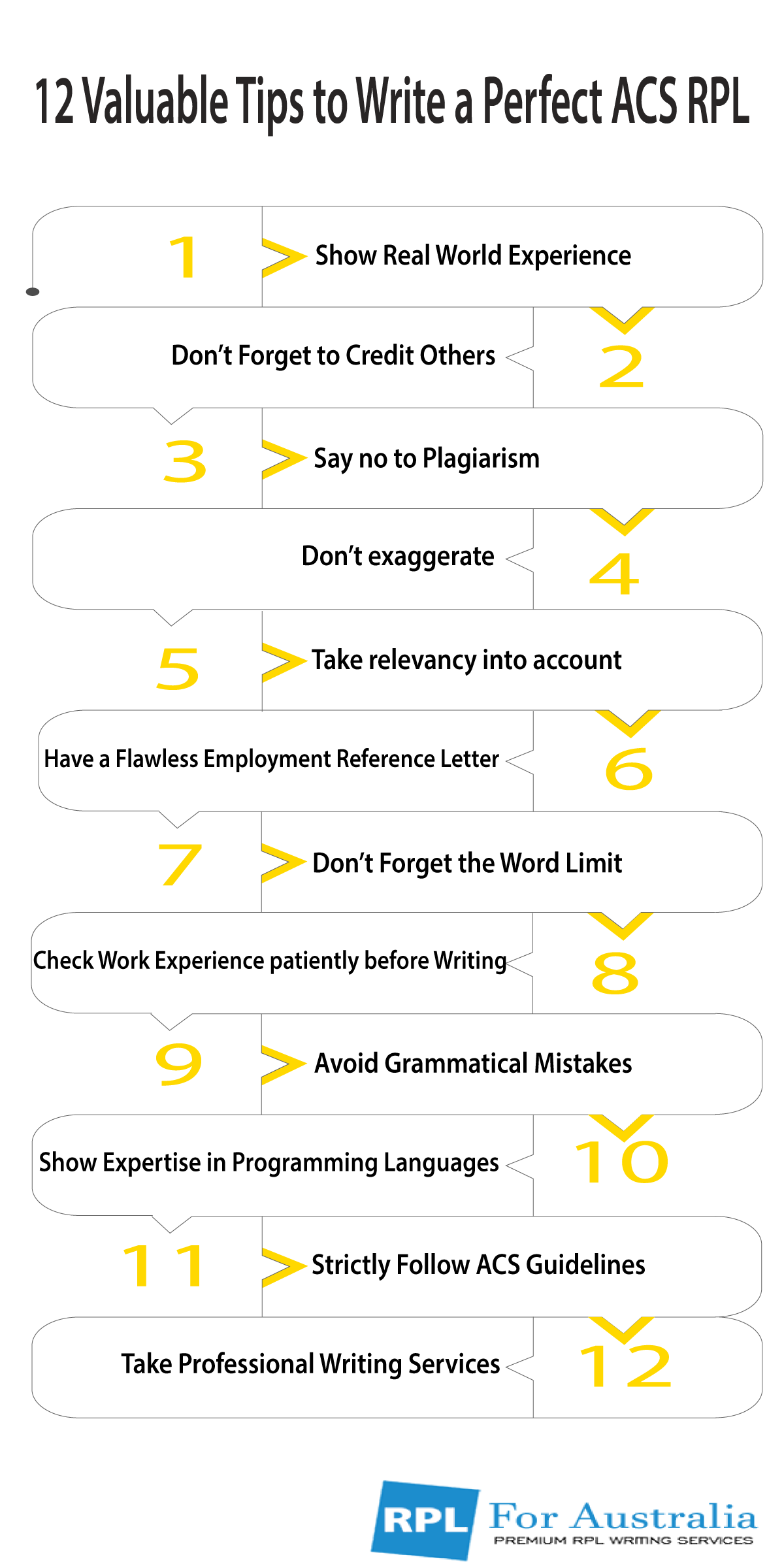
The RPL Report Writing Services Australia requires careful attention to detail, effective structuring, and a focus on highlighting key skills and experiences relevant to your ICT occupation. Here are some tips to help you craft a compelling and error-free report:
Structuring the Report Effectively:
- Introduction: Begin with a brief introduction, including your name, contact information, ANZSCO code, and the purpose of the report (e.g., migration or professional recognition).
- Educational Qualifications: Provide a detailed overview of your academic qualifications, including degree titles, institutions attended, and completion dates. Ensure alignment with the ICT content required by ACS.
- Work Experience: Outline your relevant work experience, including job titles, duration of employment, and a description of duties and responsibilities. Organize this section chronologically, starting with your most recent position.
- Recognition of Prior Learning (if applicable): If relying on RPL, clearly articulate your ICT skills and competencies acquired through practical experience, projects, or self-study.
- English Language Proficiency: Present evidence of meeting the English language proficiency requirements specified by ACS, either through test scores or exemptions.
- Professional Development: Highlight any relevant certifications, training programs, or workshops attended to demonstrate continuous learning and professional growth.
- Conclusion: Summarize the key points of the report and reiterate your suitability for the nominated ICT occupation.
Emphasizing Key Skills and Experiences:
- Align with ANZSCO Code: Ensure that the skills and experiences you highlight correspond to the requirements outlined in the ANZSCO code for your nominated occupation.
- Use Specific Examples: Provide concrete examples and achievements from your education and work experience that showcase your proficiency in ICT-related tasks and technologies.
- Quantify Achievements: Where possible, quantify your contributions and accomplishments to demonstrate the impact of your work (e.g., project outcomes, cost savings, efficiency improvements).
- Address Selection Criteria: Address each criterion specified by ACS for the assessment of your ICT skills and qualifications, providing detailed evidence to support your claims.
Avoiding Common Mistakes:
- Inaccurate or Incomplete Information: Ensure all details provided in the report are accurate, up-to-date, and complete. Double-check dates, job titles, and educational qualifications for consistency.
- Insufficient Documentation: Provide all required supporting documentation and evidence as per ACS guidelines. Failure to submit necessary documents may result in delays or rejection of your application.
- Plagiarism: Write the report in your own words, avoiding plagiarism of content from other sources. ACS requires original submissions that accurately reflect your skills and experiences.
- Lack of Proofreading: Thoroughly proofread your report to eliminate grammatical errors, typos, and formatting inconsistencies. Consider seeking feedback from a trusted colleague or professional editor.
V. Proofreading and Editing
Thorough proofreading is crucial to ensure the accuracy, clarity, and professionalism of your ACS Skills Assessment Report. It helps to detect and rectify errors in grammar, spelling, punctuation, and formatting, ensuring that your document meets the highest standards of quality.
Utilizing grammar and spell check tools can significantly aid in identifying and correcting mistakes efficiently. By providing automatic checks for punctuation, grammar, and spelling mistakes, these tools make it simple for you to edit your writing. However, while these tools are useful, they may only catch some mistakes, so manual review is still essential.
By dedicating time to thorough proofreading and utilizing available tools, you can enhance the overall coherence and effectiveness of your ACS Skills Assessment Report, ultimately improving your chances of a successful outcome.
VI. Final Checks Before Submission
Ensure completeness: Double-check all required documents and information according to ACS guidelines.
Review for accuracy: Check for any errors, inconsistencies, or missing details in your report’s content, structure, and language. Consider seeking feedback for additional assurance.
Conclusion
In conclusion, the ultimate checklist provided serves as a comprehensive guide for navigating the intricacies of RPL Report Writing Services Australia. By meticulously following each step, applicants can streamline their preparation process, ensuring completeness, accuracy, and coherence in their submissions. Armed with this checklist, individuals can confidently pursue their immigration or career aspirations in Australia’s ICT sector.